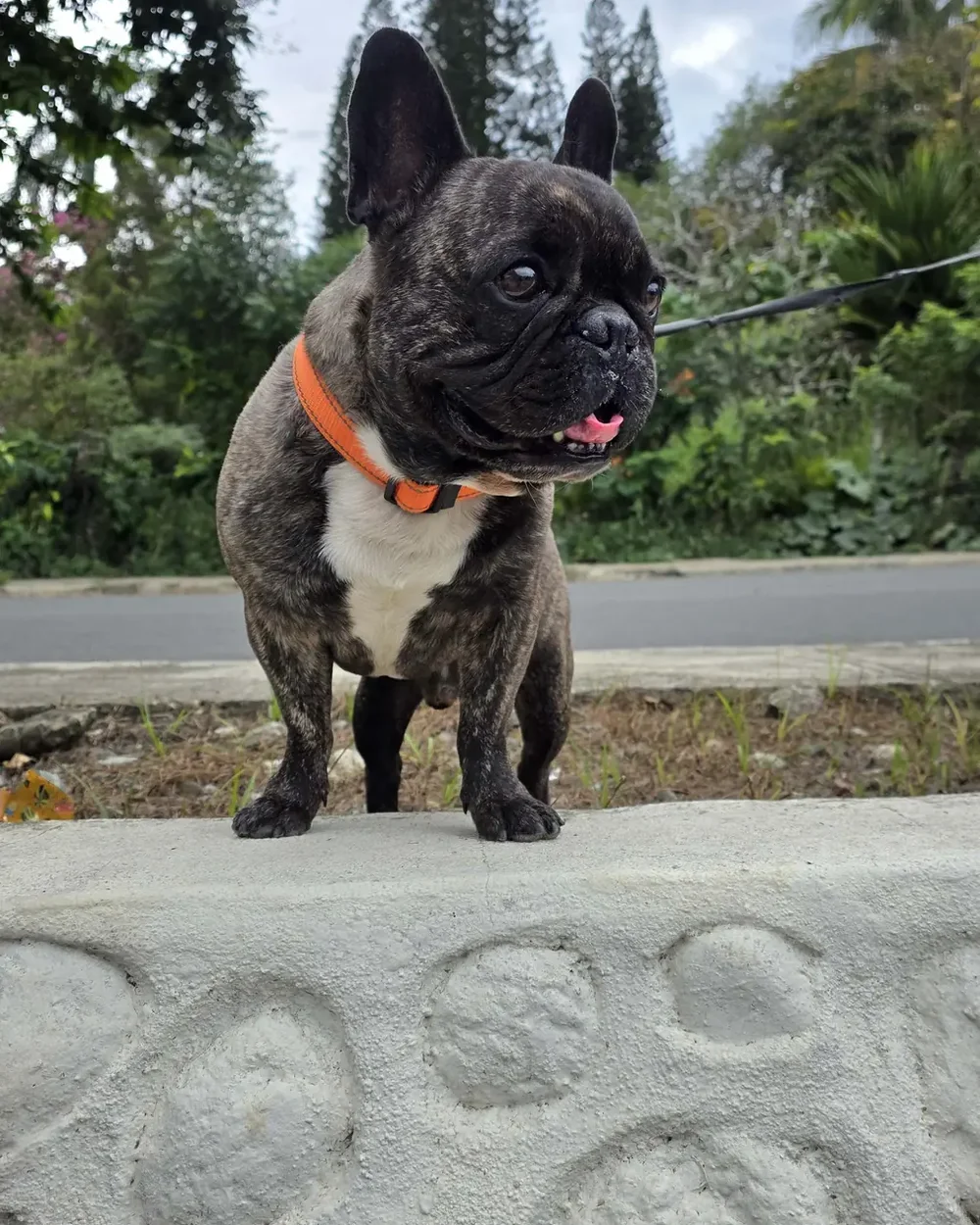
The French Bulldog is, today, one of the most popular dogs in the world. Compact, expressive, deeply attached to its people. Also one of the most medically complicated breeds alive. Loving one well means understanding both halves.
I. Origin & History
Despite the name, the Frenchie's roots are English. In the 1800s, Nottingham lace workers kept small "toy" Bulldogs as companions. When industrial machinery pushed them out of work, many emigrated to Normandy, taking their dogs along.
In France, the breed crossed with terriers and small ratters, picking up the upright "bat ears" that distinguish Frenchies today. By the 1880s the breed was popular with Parisian artists, prostitutes, and shopkeepers alike. The American Kennel Club recognized it in 1898.
By 2022, the French Bulldog became the #1 most-registered breed in the United States for the first time, displacing the Labrador after 31 years at the top.
II. Colors & Coats
The AKC breed standard accepts only 6 colors and patterns. The rest — Blue, Lilac, Merle, "exotic" — are called "fad colors" and are disqualified by the breed standard. The FBDCA strongly warns against breeding for them due to serious health risks.
AKC Standard Colors

Fawn
Light tan to deep reddish-brown. The most classic Frenchie color.

Cream
Solid off-white. Black pigment on nose, eye rims, paw pads.

White
Pure white coat. Must have dark pigment. Not albino.
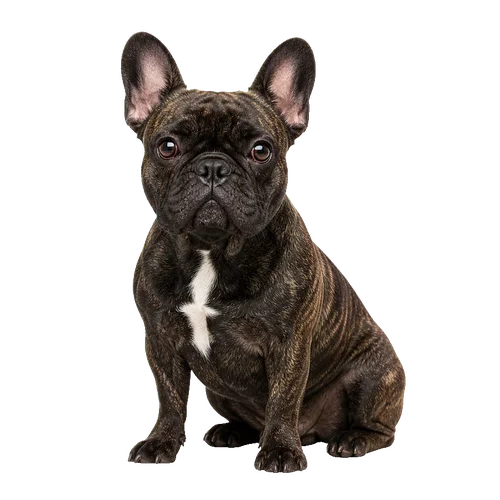
Brindle
Fawn base with black striping. "Tiger brindle" to dark brindle. Spike is dark brindle.
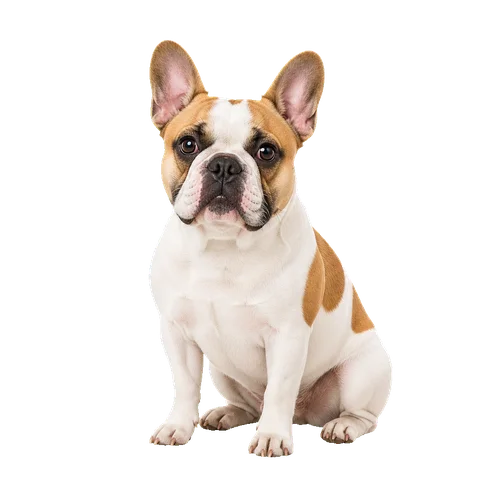
Fawn & White
Fawn with white markings (piebald pattern).

Brindle & White
Brindle patches on a white background (piebald).
The FBDCA strongly warns against breeding for non-standard "fad" colors. These often come with serious health risks, are frequently produced by breeders prioritizing profit over health, and cannot be shown in AKC conformation events. A higher price tag does not mean a healthier dog — often the opposite.
Disqualified Colors (Fad Colors)
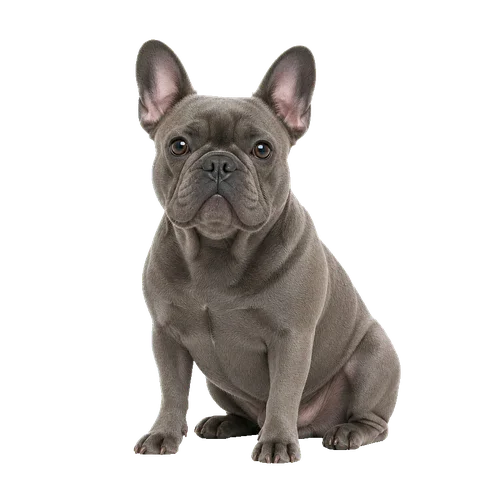
Blue (Mouse/Gray)
Risk: Color Dilution Alopecia — genetic hair loss, chronic skin issues.
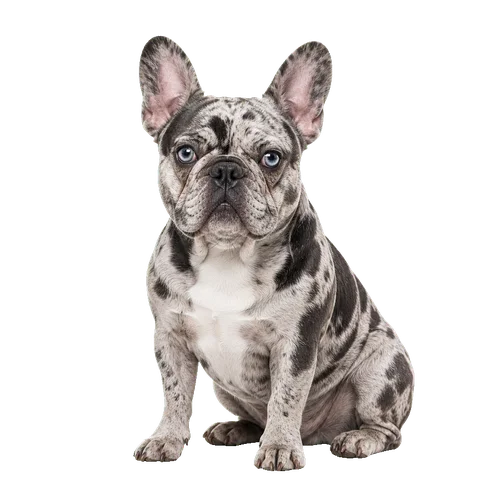
Merle
Highest risk: blindness, deafness. NOT natural to the breed — introduced by crossbreeding.
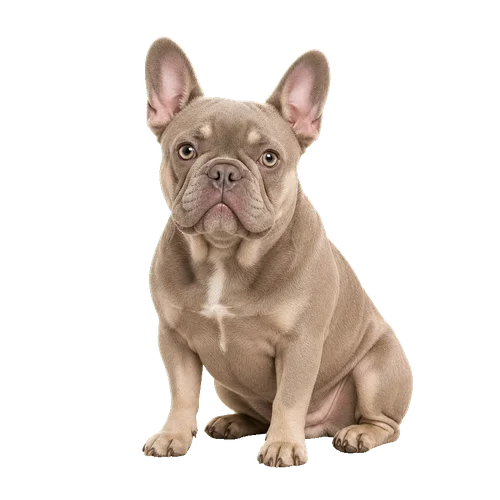
Lilac
Risk: Blue + chocolate dilution combined — double risk of skin problems.
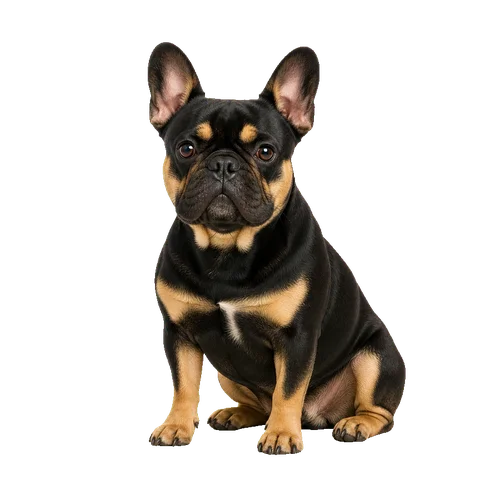
Black & Tan
No specific color-linked risk, but not part of the breed's traditional palette.
III. Temperament & Personality
Velcro dog. Frenchies bond intensely with one or two people and follow them room to room. They love to be close to their people — which is not the same as separation anxiety (read the chapter).
Stubborn but smart. Trainable, but they decide whether your request is worth their effort. Positive reinforcement (treats, praise) works.
Quiet but expressive. Low barking, lots of chirps and "talking." Each Frenchie develops a personal sound vocabulary. Loud snoring or snorting at rest is different: it can be a sign of BOAS, the breathing disease of flat-faced dogs, so tell your vet (read the chapter).
Generally social. Friendly with kids and most other dogs, though they can be possessive of their humans. Same-sex dog conflicts are not unusual in adulthood.
IV. Life Stages
| Stage | Age | Key milestones |
|---|---|---|
| Puppy | 0–6 months | Vaccines, socialization window, first vet visits, crate training. Official BOAS Functional Grading starts at 12 months. |
| Adolescent | 6–18 months | Hormone surge, selective deafness, testing boundaries. Best window for BOAS surgery if needed. |
| Young adult | 1.5–5 years | Peak energy. Allergies, skin conditions often appear. Annual vet checkups critical. |
| Mature adult | 5–8 years | Weight tends to creep up. Joint and spine issues may show. Senior bloodwork yearly. |
| Senior | 8+ years | Slower walks. Watch for arthritis, cataracts, heart issues. Many Frenchies live to 11–13. |
V. vs Other Bulldogs
People mix them up constantly. Here's the short version:
French Bulldog
Ears: Upright "bat"
Origin: England → France
Vibe: Small, playful, indoor companion
English Bulldog
Ears: Rose-shaped, folded
Origin: England, bull-baiting
Vibe: Stocky, mellow, very brachy
American Bulldog
Ears: Drop or semi-prick
Origin: USA, working farm dog
Vibe: Large, athletic, NOT brachycephalic
Important: Frenchies and English Bulldogs are flat-faced (brachycephalic) — sharing many of the same breathing, eye, and skin issues. American Bulldogs have longer muzzles and are mostly free of those problems.
VI. Choosing a Frenchie
If you're considering one, here are the non-negotiables before paying:
- Health-tested parents. Both should have BOAS Functional Grading certificates (Grade 0 or 1 only). Spine and eye screenings too.
- See the mother in person. If the breeder won't show her, walk away.
- Avoid "rare" colors — blue, lilac, merle, fluffy. Some of them carry a higher health risk, and choosing them supports irresponsible breeding for profit.
- Avoid online "shipped" puppies. Many puppy mill operations. No way to verify health.
- Adoption first. Frenchie rescues exist in most countries. Many are surrendered when health bills get high.
A well-bred, health-tested Frenchie puppy costs $3,000–$6,000 in 2026. Expect another $2,000–$5,000/year in veterinary and food costs. Surgical interventions (BOAS, cherry eye, IVDD — spinal disc disease) can each cost $3,000–$10,000.
References
- American Kennel Club — French Bulldog Breed Standard. akc.org
- French Bulldog Club of America — History. frenchbulldogclub.org
- The Kennel Club UK — Respiratory Function Grading. thekennelclub.org.uk
- Cambridge BOAS Research Group. cam.ac.uk
- O'Neill et al. (2021), VetCompass. PMC8675495
- AKC 2022 Most Popular Breeds Report. akc.org