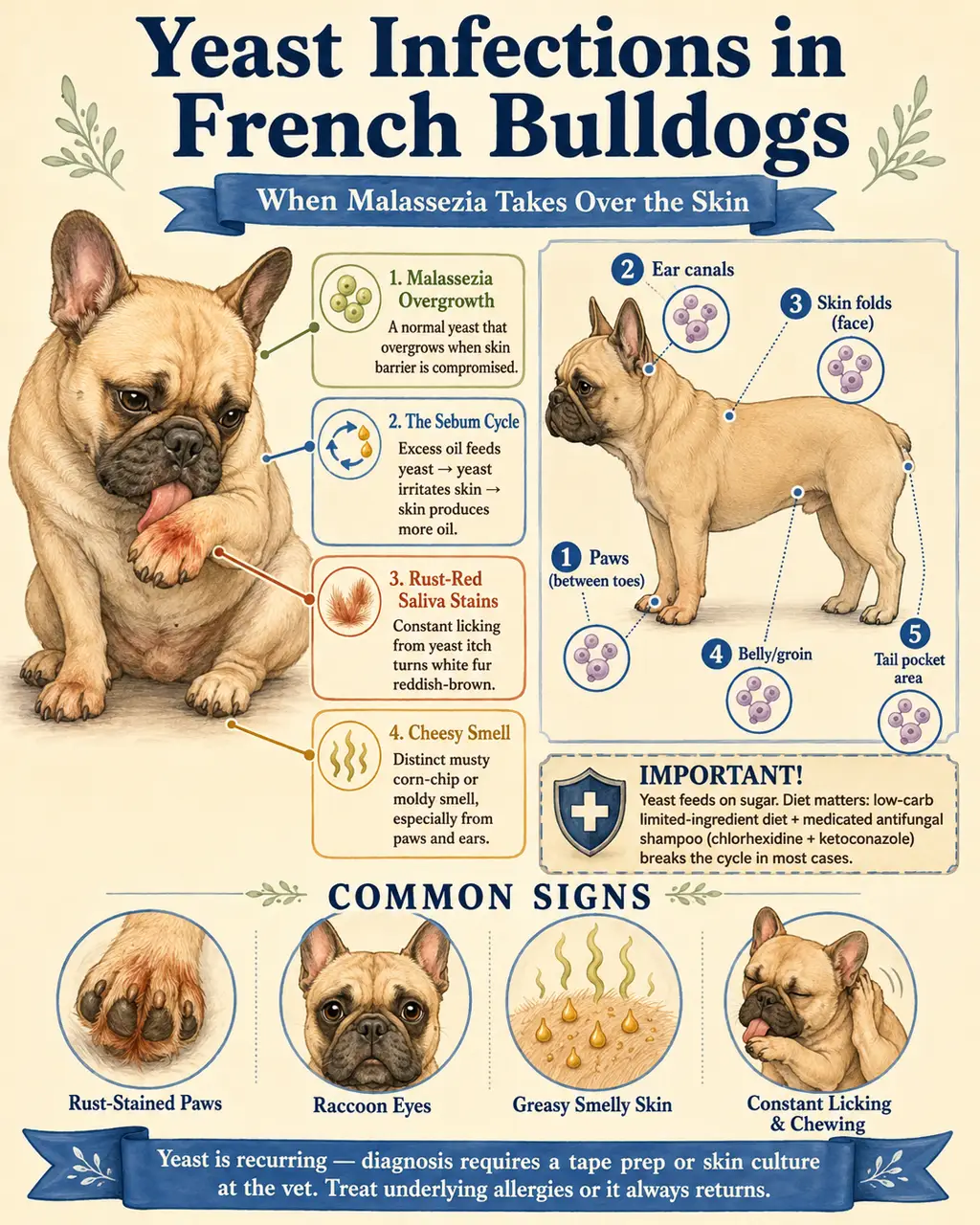
If your Frenchie smells like a corn-chip bag and has rust-colored paws even after a bath, you're not dealing with allergies alone. You're dealing with yeast that has set up a self-feeding loop, and steroids alone make it worse.
I. What Yeast Infection Is
Malassezia pachydermatis lives normally on every dog's skin in small numbers. The problem starts when something disrupts the skin barrier — allergies, moisture, antibiotics — and the yeast multiplies out of control.
Once it overgrows, it becomes self-feeding: yeast inflames skin → inflamed skin produces more sebum → more sebum feeds more yeast. French Bulldogs are one of the breeds where this cycle gets stuck on permanently if left untreated.
II. Why Frenchies Are Prone
- Skin folds trap moisture and warmth (face, neck, tail pocket, vulva). Yeast doubles every ~30 minutes in warm humid microclimates.
- Brachycephalic biology — elevated rates of atopic and food allergies. The 2023 review (PMC10294810) found Frenchies, Boxers, Pugs and Shih Tzus all show increased allergy risk.
- Tight toe spacing on stocky paws — less airflow between toes, the classic "frito feet" smell.
III. Symptoms to Recognise
- Rust-colored paws (saliva staining from licking).
- "Raccoon eyes" — dark crusty eye-wrinkle buildup.
- Frito-feet / corn-chip smell.
- Recurrent ear infections (brown waxy discharge).
- Red belly, armpits, groin.
- Hyperpigmentation (gray or black "elephant skin").
- Greasy coat (oily even after a bath).
IV. Yeast vs Allergy — How to Tell
- Allergy alone: red itchy skin, no smell, no grease, no rust paws. Vet cytology shows eosinophils, no yeast.
- Yeast alone (rare in Frenchies): smelly, greasy, dark patches. Cytology shows budding yeast.
- Both together (most Frenchies): itchy + smelly + greasy + rust paws. Cytology shows both.
Owner mistake: treating only the itch with steroids → yeast feeds on the suppressed immune response → it roars back worse. If steroids "work for a week then everything gets worse," yeast is the engine.
V. What Feeds Yeast — The Diet Question
Owner consensus (Reddit, Frenchie forums): cut sugars, simple carbs, sweet potato, peas, white rice. Switch to lower-carb protein-forward food. 2–4 weeks of visible improvement reported.
Whole Dog Journal counterpoint: "yeast-free diets" are not supported by clinical research. Yeast feeds on skin sebum, not blood glucose directly.
Honest take: diet helps some dogs, not others. Free to try — single-protein limited-ingredient food is harmless and many owners swear by it.
VI. Topical Treatments Without a Vet
- Chlorhexidine 4% + miconazole 2% shampoo (Malaseb, Douxo S3 PYO, TrizCHLOR4) — leave on skin 10–15 min, 2× weekly.
- Chlorhexidine wipes daily for folds and paws.
- Apple cider vinegar paw soak (1:1 with water, 5 min, dry thoroughly) — owner favourite, WDJ disputes.
- Coconut oil topical — antifungal lauric acid, paw-pad favourite.

"Tropical humidity is yeast heaven. We do chlorhexidine wipes after every walk — paws, folds, ears — and a medicated bath every Sunday. The smell took two months to leave. The rust on his paws? Six. Patience is the whole game."
VII. Systemic Treatment — Vet Only
Doses below are reference ranges from veterinary literature. Your vet will determine the exact dose based on your dog's weight, liver/kidney function, and other medications. Wrong dose can cause liver failure.
- Ketoconazole: typical reference range 5–10 mg/kg, frequency varies by source (Merck Vet Manual). Requires liver enzyme monitoring on long courses.
- Itraconazole pulse: typical Malassezia protocol ~5 mg/kg orally, daily for 2 days, weekly for 3 weeks.
- Fluconazole: alternative for severe or recurrent cases.
Doses must be confirmed by your vet — references differ between sources (Merck, Plumb's, JSAP).
VIII. Timeline — What to Expect
- Week 1–2: itch reduces with shampoo + diet.
- Week 4–6: ears clear, no head shaking.
- Month 3–6: skin tone normalises, smell gone.
- Month 6–12: rust paw staining grows out (it has to grow out — staining doesn't bleach).
IX. Common Owner Mistakes
- Over-bathing — daily medicated baths strip the skin barrier and make it worse.
- Long-term steroids — mask symptoms, feed yeast.
- Stopping treatment too early — yeast comes back within 2 weeks.
- Human anti-dandruff shampoo (Selsun Blue, Head & Shoulders) — forum myth, NOT vet recommended.
Owners Also Ask
Why does my French Bulldog smell like corn chips?
That “Frito feet” smell is Malassezia yeast. Small amounts live on every dog, but Frenchie paws — stocky, with tight toe spacing and little airflow — are a warm, humid microclimate where yeast can double every ~30 minutes. A faint whiff after a rainy walk is common; a strong persistent smell plus rust-colored paws or greasy coat means overgrowth that needs treatment.
How do I know if it’s yeast or allergies?
Allergy alone: red, itchy skin — but no smell, no grease, no rust staining. Yeast: the smell, greasy coat, dark “elephant skin” patches. Most Frenchies have both at once, because allergies break the skin barrier and yeast moves in. The only sure answer is a quick cytology test at the vet — a piece of tape and a microscope.
How long until the smell and rust stains go away?
Longer than anyone wants to hear. With consistent treatment, itch improves in 1–2 weeks, ears clear around week 4–6, and the smell typically leaves in 3–6 months. The rust staining on paws takes 6–12 months — it doesn’t wash or bleach out, the stained hair has to grow out. Patience is the whole game.
Can I treat a yeast infection at home?
The topical layer, yes: a chlorhexidine + miconazole shampoo (left on 10–15 minutes, twice weekly) and daily chlorhexidine wipes for folds and paws. But oral antifungals are strictly vet-territory — wrong dosing can cause liver failure. And skip the steroid shortcut: steroids alone suppress the itch while the yeast roars back worse.
Does a “yeast-free diet” actually work?
Honest answer: the evidence is split. Many owners report visible improvement in 2–4 weeks after cutting sugars and simple carbs; Whole Dog Journal counters that yeast feeds on skin sebum, not blood glucose, and clinical research doesn’t support “yeast-free” diets. A single-protein, limited-ingredient food is harmless to try — it helps some dogs and not others.
References
- Canine Malassezia dermatitis. PMC5603939
- Malassezia in Veterinary Dermatology. PMC7059102
- Brachycephalic Dermatology Review. PMC10294810
- Whole Dog Journal — Yeast Infection on Dog's Paws. whole-dog-journal.com
- Yeast Dermatitis — VCA Hospitals. vcahospitals.com