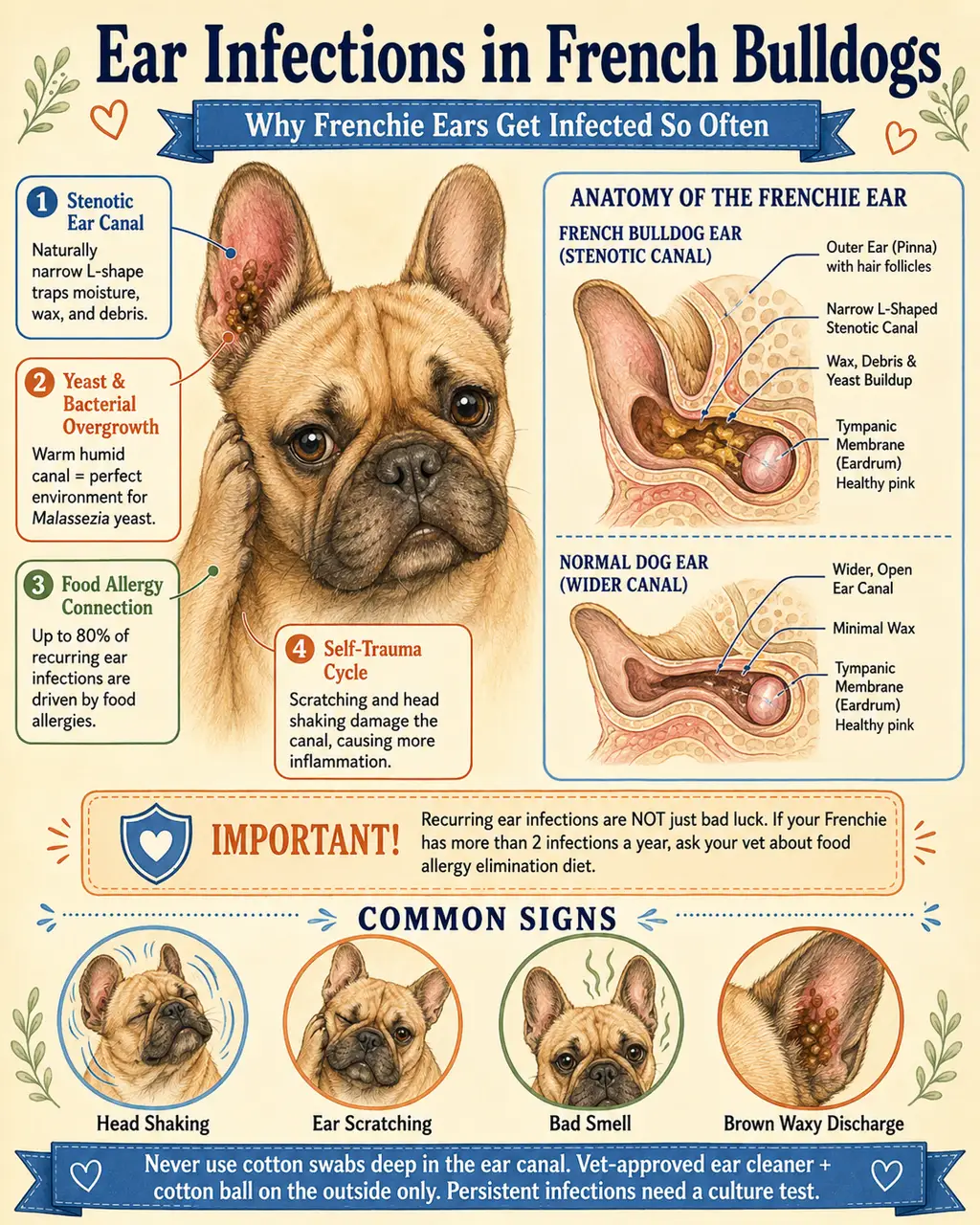
Frenchies get ear infections more often than the average dog (UK: about 2× the odds of crossbreds) — narrow canals + allergies. Behind chronic ear infections there is often an allergy — sometimes to food. Drops clear the infection. Finding the allergy helps stop it coming back.
Inflammation of the external ear canal — rarely a one-off in Frenchies. Driven by stenotic (narrow) ear canals + atopic dermatitis. Yeast (Malassezia) and bacteria (Staph, Pseudomonas) colonize. Chronic ear infection = often an allergy underneath — ask your vet about a food trial. Vet should do cytology (smear under microscope) every infection — without cytology = guesswork.
I. Why Frenchies Are Prone
- Stenotic (narrow) ear canals — brachycephalic skull compresses the canal. Less airflow, more humidity, more wax retention.
- Skin-fold + pinna anatomy — erect "bat" ears trap less debris than floppy ears, but the canal opening sits over folded skin trapping moisture.
- Allergies — Frenchies have about 7.7× the odds of an allergic skin disorder and about 2× the odds of atopic dermatitis (VetCompass 2021). Allergy = primary cause; infection = secondary.
II. What's Actually Growing
- Malassezia pachydermatis (yeast) — the most common finding (66 of 100 dogs with ear infections in a referral study)
- Bacterial: Staphylococcus pseudintermedius (early), Pseudomonas aeruginosa (chronic — nightmare scenario)
- Pseudomonas forms biofilms in about 40% of cases and is hard to treat; resistant strains are increasing
- In one small study of dogs with chronic ear infections, more than 80% of ears also had a middle-ear infection, often with an intact eardrum
III. The Allergy Link
- Allergic skin disease is the most common cause of ear infections (43 of 100 dogs in a referral study); about 3 in 4 dogs with chronic ear infections also have other skin problems
- Ear infections are one of the most common signs of food allergy (reported in 3–69% of food-allergic dogs, depending on the study)
- Sometimes an ear infection is the first or only sign of a food allergy
- A Frenchie with chronic ear infections often has an allergy underneath
IV. Symptoms
- Head shaking, head tilt
- Scratching at ears
- Brown/black or yellow waxy discharge
- Foul / fermented smell
- Redness inside the pinna
- Pain when ears are touched
- Hair loss around the base
- Late: blood, ulceration, balance issues (middle ear)
V. DIY Cleaning Routine
- A dog ear cleaner your vet recommends — never anything else in the ear
- For Pseudomonas-prone ears: only the cleaner your vet chooses, and only after your vet confirms the eardrum is intact
- Squirt cleaner generously, massage base 20-30 sec (squelch sound), let dog shake, wipe visible canal with gauze
- Clean only when needed — when there is visible wax. A bad smell, discharge or pain means the vet, not cleaning. Over-cleaning healthy ears can irritate the canal and lead to infection.
VI. When to Skip DIY and Go to Vet
- Pain, whining when touched
- Blood or pus
- Strong bad smell, pus or pain
- Head tilt, circling, eye darting (otitis media)
- It keeps coming back after treatment
Vet should do cytology (smear under microscope) every infection. Without cytology = guesswork. Chronic / resistant → culture and sensitivity.
VII. Treatment
Ear medications must be prescribed by your veterinarian. Some require an intact eardrum to use safely. With a damaged eardrum, some ear medicines can harm hearing — that is why the vet checks the eardrum first.
- Yeast (Malassezia): antifungal ear drops — which ones, your vet decides from the cytology.
- Bacteria (Staph): prescription combination drops.
- Pseudomonas: treatment by mouth and in the ear, plus special flushes — all led by your vet, who also decides how long: until a repeat test shows the infection is gone.
VIII. Owner Mistakes
- Do NOT use cotton swabs / Q-tips — they push debris deeper and can puncture the eardrum
- Do NOT use hydrogen peroxide — irritates the inflamed canal
- Finish the full course of drops — symptoms clear before the infection does
- Address the allergy, not just the infection — otherwise it tends to come back
- Chronic untreated → end-stage otitis (hardened, calcified canals that often need major surgery)
FORUM FINDING (French Bulldog News forum) — UNOFFICIAL FINDING: Drops clear the infection. Then it recurs in weeks. The vet says "expected with the breed." Owners report the ear infections stopped after they switched food. Ask your vet before you change your dog's food.
Drops treat the symptom; allergy diagnosis treats the cause.
References
- VetCompass Frenchies study. PMC8675495
- Frequency and predisposing factors for canine otitis. PMC8422687
- Pseudomonas otitis externa in dogs. PMC6190182
- Cornell — How to Clean Your Dog's Ears. Cornell.edu
- VCA — Ear Cleaning Instructions. VCAhospitals.com