Why he does what he does
Click any card to dive in. Every chapter opens with a straight answer, then the research — and Spike’s experience, kept apart from the advice.
Information compiled from public sources, including peer-reviewed studies. Statistics vary between studies. A sudden change in behavior can be pain or illness — see your vet first. Never medicate your dog without veterinary approval.
A breed summary is only a prejudice about the breed.
You can use prejudices — but get to know your own dog.
It depends on the breeding, the environment, and the dog’s own character. He may have all of the breed’s traits, some of them, or none. Every dog is his own.
Pick what is going on
Chapters are grouped by situation.
Is This Normal?
The questions owners actually type into Google.
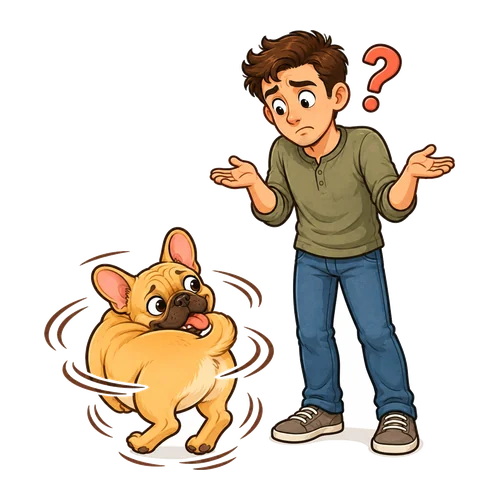
Is It Normal for My Dog to Do That?
Zoomies, rolling, eating odd things.
The strange things dogs do, and which ones are worth a call to the vet.
Read chapter 02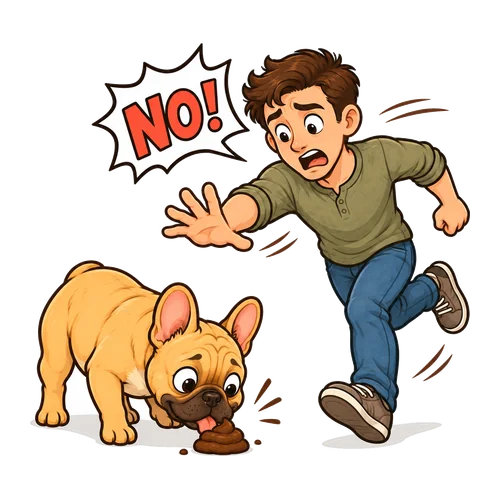
Eating Poop
Why does he do it?
Why dogs eat feces, and what the research says about stopping it.
Read chapterHome Alone
What happens after the door closes.
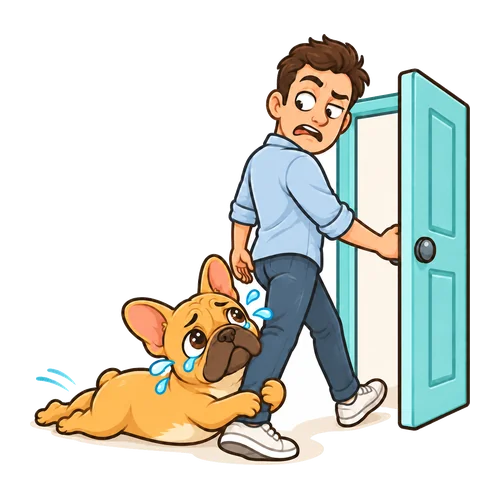
Separation Anxiety
Clingy is not the same as anxious.
No study backs the “70% of Frenchies” figure. Being alone is a skill — this is how a dog learns it.
Read chapter 04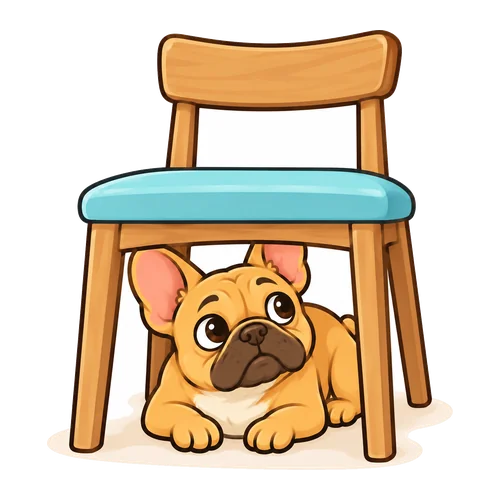
A Safe Space
Where he goes when it’s too much.
Why a dog needs a place of his own, and why the best one is the one he picks.
Read chapter 05
Fear of Noises
Thunder, fireworks, gunshots.
How to get a frightened dog through the loud nights, and what to prepare before they come.
Read chapter 06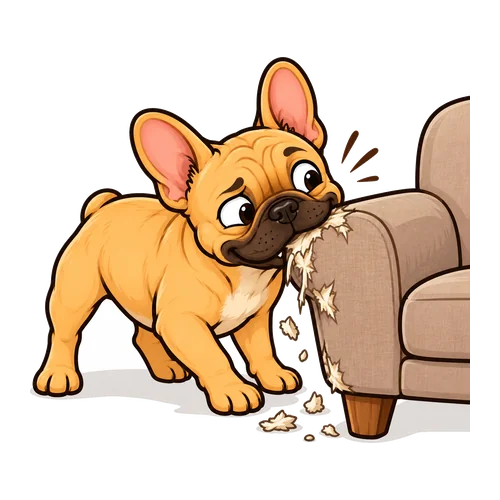
Destructive Chewing
First teeth, then boredom.
Why chewing can outlast the puppy teeth, and what to do before the furniture pays for it.
Read chapter 07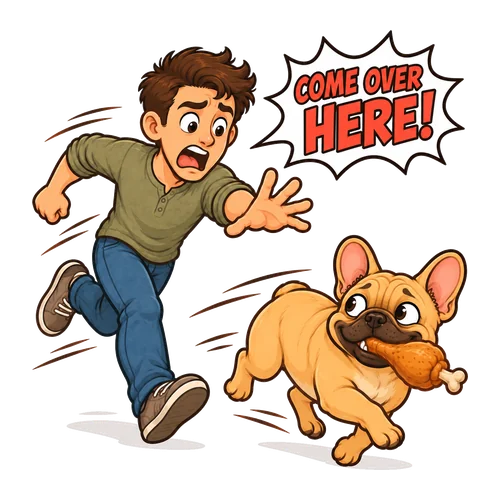
Accidents in the House
Vet first, trainer second.
When a house-trained dog starts peeing or pooping indoors, a medical cause comes first.
Read chapterHis Places and His Voice
Barking, growling, and the spots he defends.
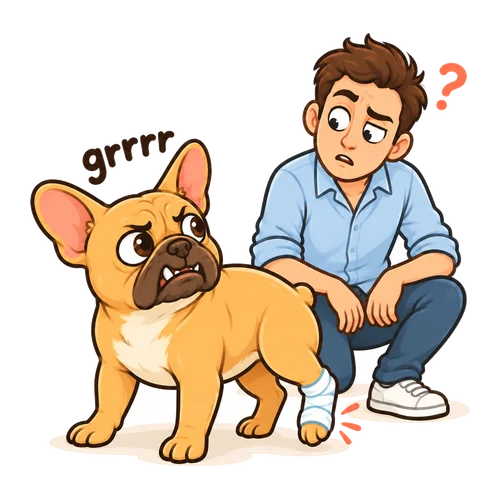
Is It Aggression?
Pain travels. Fear travels. Territory doesn’t.
A free test that helps tell apart three things that look the same from the outside.
Read chapter 09
Barking and the Gate
Not every bark says the same thing.
Why some dogs guard the gate, and how to tell one kind of bark from another.
Read chapter 10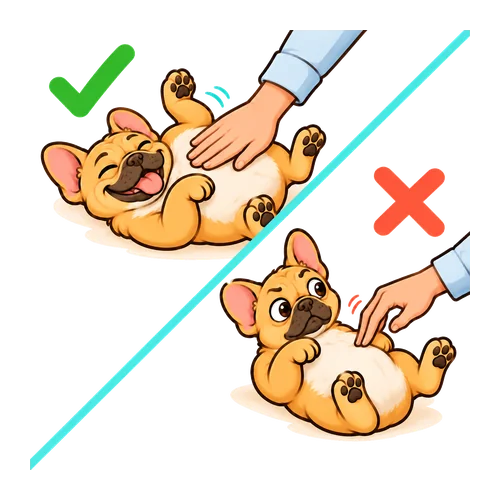
Touch and Consent
He can’t talk. He can only show you.
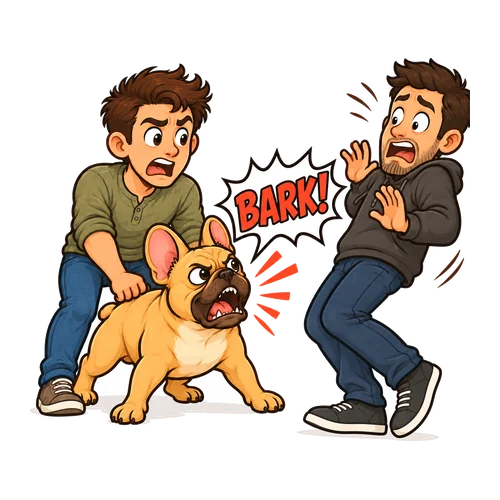
The signs a dog gives before a growl — and what a growl is really saying.
Read chapterGuarding
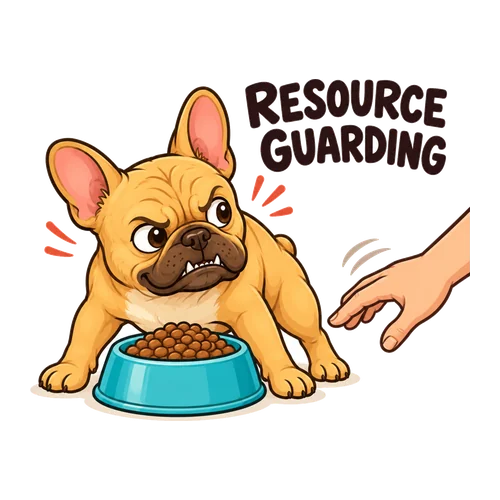
Food, toys, places — and people.
Other Dogs and the Walk
Signals, distance, and what to do if it goes wrong.

Why Other Dogs React to a Frenchie
A face that is hard to read.
Why a flat face and a short tail can make a Frenchie harder for other dogs to read.
Read chapter 14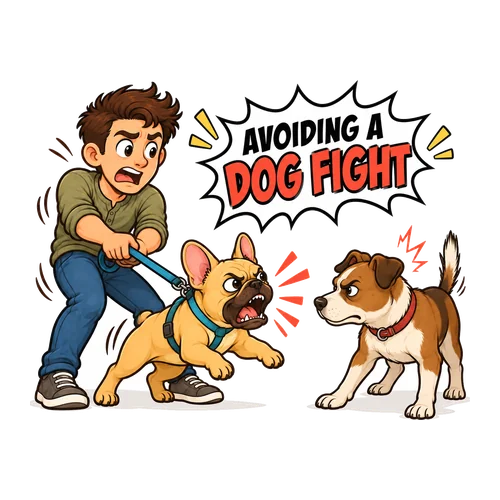
Avoiding a Dog Fight
Distance is the whole strategy.
How to read a situation early and keep your dog out of trouble on the walk.
Read chapter 15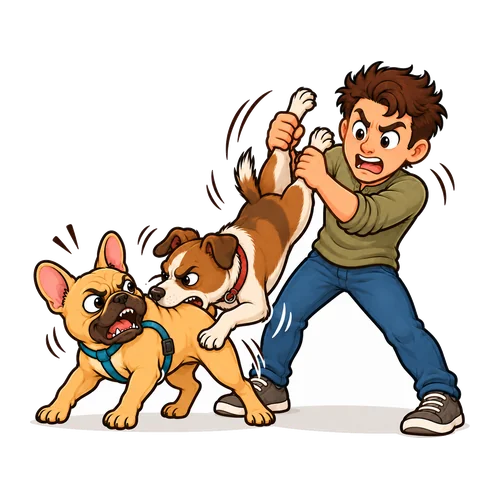
Breaking Up a Dog Fight
If it happens anyway.
What to do in the first seconds, where not to put your hands, and what to carry on a walk.
Read chapter 16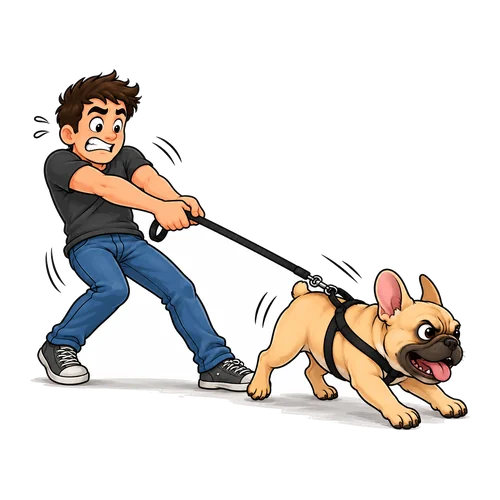
Pulling on the Leash
Use a harness, never a collar.
Why this site says harness for a flat-faced dog, and how to teach a loose leash.
Read chapter 26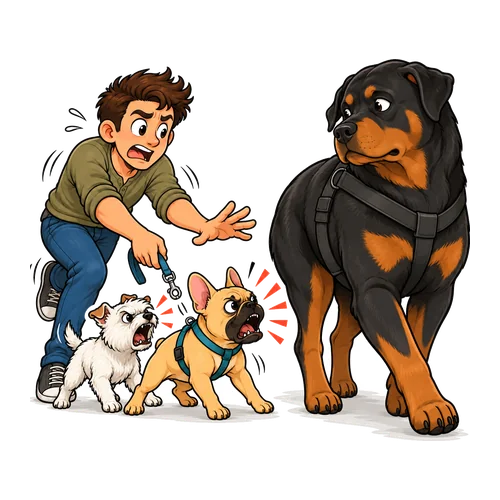
Your Dog Doesn’t Know His Size
Your small dog can get hurt.
Why a small dog barking at or surrounding a much bigger dog is a safety problem, and what the owner has to see first.
Read chapterThe First Weeks
What a puppy learns early, and what is hard to teach later.
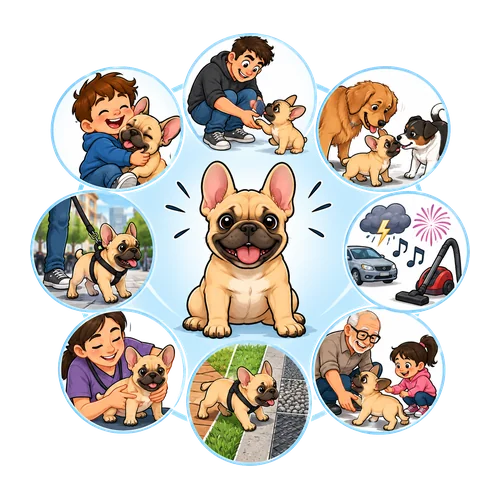
The Socialization Window
The only chapter with a deadline.
What a puppy needs to meet in his first months, and why those weeks don’t come back.
Read chapter 18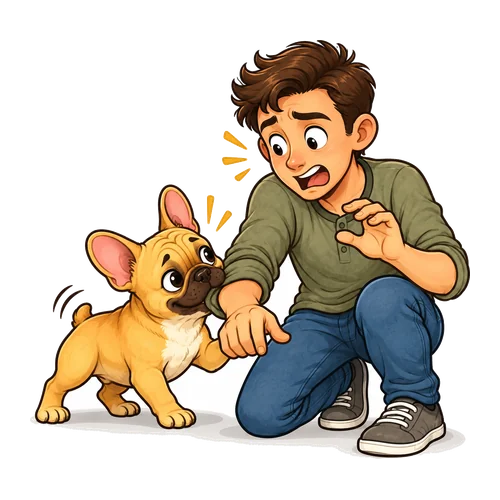
Puppy Biting
Needle teeth, big lesson.
Why puppies bite, and how they learn to bite gently.
Read chapter 19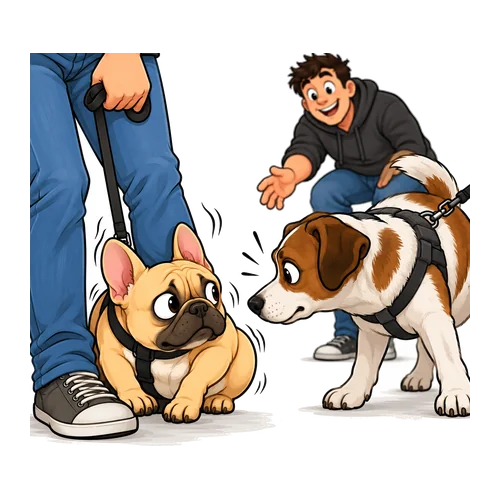
Fear of Strangers and Other Dogs
Not every nervous dog was hurt.
Where fear of new people and dogs usually comes from, and how to help without pushing.
Read chapter 20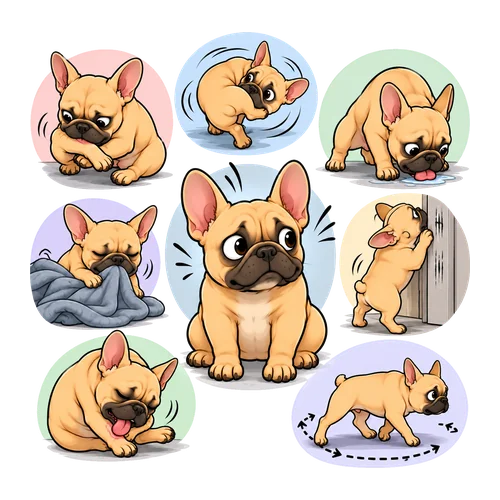
Compulsive Behaviors
Tail chasing, licking, spinning.
When a habit stops being a quirk, and why the vet comes first.
Read chapterThe Vet, Handling, and Learning
How he copes with being handled, how he learns, and what he picks up from you.

At the Vet
A frightened dog, a calm plan.
How to make vet visits easier for a dog who hates being held.
Read chapter 22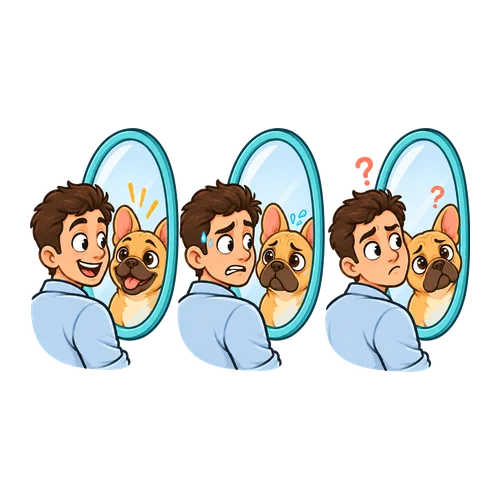
Your Dog Is Your Mirror
Do your emotions affect your dog?
Do the moods of owner and dog match? What the studies found, and where the finding does not hold.
Read chapter 23
How a Frenchie Learns
Stubborn, or built differently?
What one small study found about how bulldogs solve problems, and what that may mean for training.
Read chapterAge and Sleep
Changes that look like behavior but start somewhere else.

Sleep
Look at how he sleeps first.
What studies say about dog sleep and behavior, and why the nights of a flat-faced dog are an airway question.
Read chapter 25
The Senior Dog
Confused, restless, awake at night?
When behavior changes in an older dog are cognitive decline, and why it is worth a vet visit.
Read chapterDid the behavior change suddenly?
A dog in pain can act like a different dog. When a change comes out of nowhere, start with your vet — then come back here.
See the Health Guide